How To Develop Self Awareness In Nursing
How To Develop Self Awareness In Nursing... and in life
You're not sure when. And you're not sure why. But you feel it. A moment when something shifts.
Not dramatically. Not all at once.
But enough that you notice.
Maybe it’s in the middle of a shift when your chest feels tight and you realize you haven’t taken a full breath in hours.
Maybe it’s driving home, replaying the day, wondering why something affected you more than you expected.
Or maybe it’s 3am, wide awake, your body still running as if you’re at work.
And in that moment, you see it.
The pattern. The fatigue. The way you’ve been holding everything together.
That awareness matters.
But it’s not the finish line. It’s the beginning.
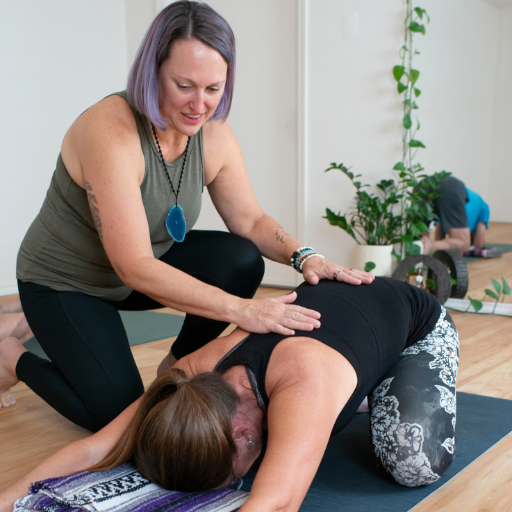
Self awareness is something you build in the body
In nursing, self awareness is often framed as insight: being reflective, being thoughtful, understanding your reactions.
Yes and...
Real, sustainable self awareness isn’t just cognitive. It’s physiological.
Your nervous system, the part of you that responds under pressure, is not organized by what you know.
It’s organized by what you’ve repeatedly experienced.
Think about some of your most chaotic moments at work. There's a pattern in there. How you react. Those patterns shape us as a nurse. How we respond when a patient is about to crump. When we hear the bed alarm signal. When a patient rolls into the unit coding. Those patterns help us be exceptional nurses.
Now where does this stop helping us and start hurting? When we use that same energy and reactiveness when we are no longer at work. We have one version of us that is fabulous navigating the ETOH withdrawal patient that is now hitting the 48 hour mark. That is not the same version needed to have a discussion with your teenager about late homework assignments.
This is said entirely with kindness, compassion, and non-judgement.
This is not your fault! This is a pattern that no one has taught us to develop a recognition practice to prevent this from happening. But once you develop it, you can recognize the pattern quicker and make different choices.
Why insight alone doesn’t change patterns
If you’ve ever thought, “I know better than this,” there’s nothing wrong with you.
There are simply different systems at play.
The thinking brain is slower. Reflective. It's where we draw on meaning and purpose.
The survival brain is faster. Protective. Automatic. (hello Mr. Darwin)
In high stress environments like healthcare, that survival response gets a lot of repetition.
Which means self awareness isn’t about overriding those responses.
This is simply learning to notice them while they’re happening and slowly introducing something new.
Not through force.
Through experience.
Three ways to begin developing self awareness (gently)
1. Notice what’s happening in your body without trying to fix it
Before anything changes, there’s noticing.
Where are you holding tension right now?
What does your breath feel like?
Is there a place in your body that feels tense or contracted?
Here we aren't correcting posture or “relaxing.”
This is developing a practice to become familiar with how your body organizes under stress.
You can't change what you don't see.
2. Use your breath as a point of return
Your breath is one of the few ways you can directly communicate with your nervous system in real time.
Not by forcing it.
But by gently lengthening an exhale.
Letting the inhale arrive without effort.
Creating just a little more space.
Even one or two breaths like between patients, before charting, sitting in your car, begins to interrupt the cycle.
Repeated over time, that interruption becomes a pathway.
3. Listen to the tone of your inner voice
Self awareness also includes how you speak to yourself.
Especially after hard moments.
Is your inner voice a bully? Dismissive? Always asking for more?
Or does your voice acknowledge what you just experienced?
Again, you DO NOT have to change the voice right away.
Simply noticing it is where you start to make the shift.
Your nervous system is always listening to how you’re being spoken to. Especially when the voice is you.
Awareness deepens through repetition
Self awareness is not a one hit wonder. It's not a destination.
Think of self awareness is a journey that you are on and each time you stroll through a familiar area, you are able to see the fine lines, the subtle nuances. It’s built in small, repeated moments of noticing.
A breath you didn’t rush.
A shoulder you realized was tense.
A moment you caught yourself before spiraling into negative self talk.
This is not small.
All of the moments where you noticed something began a new pattern.
The slow, steady movement is, quite frankly, huge.
This is the real work.
A different way to approach care...starting with you
If you’re used to taking care of everyone else, turning that same attention inward can feel uncomfortable and a bit selfish.
This is a hill I am willing to die on because it really is that important - You are your first and most important patient.
But because we have been told from many different places to take care of everyone else first, (Hi there old pattern. And my friend, this pattern needs to be replaced with something else) this is a struggle. Not because they were right but because it's a pattern that is well established.
You don’t need a perfect practice.
You just need more moments where your body gets to experience something other than urgency.
Because over time, those moments accumulate.
And what you practice gently and consistently becomes what your nervous system starts to recognize as normal. That my dear friend, is where the real benefits truly make themselves known.


